News

#research 22#llm 18#agents 15#robotics 11#open-weights 10#security 10#training 9#explainer 7#mixture-of-experts 7#reinforcement-learning 7#safety 7#kv-cache 6#multimodal 6#science 6#efficiency 5#inference 5#attention 4#tools 4#formal-verification 3#hardware 3#policy 3#how-it-works 2#quantization 2#regulation 2 clear ✕

Verified5 min

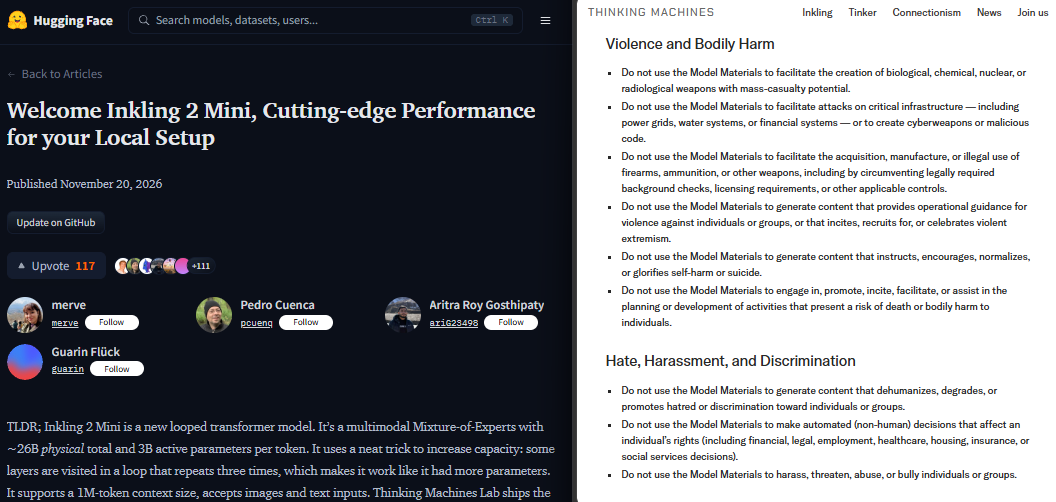
Inkling 2 Mini: a 26B mixture-of-experts model that runs its middle layers three times

Thinking Machines Lab released Inkling 2 Mini (26.4B total, 3.4B active, 1M context, text and images). Layers 6–17 run three times with shared weights, giving 48 layer visits per token. We explain the loop, the sliding-window/full-attention mix, why the loop doubles the long-context KV cache (about 4.2 GiB at 128k in 16-bit), the vendor benchmarks, and the Apache-2.0 tag plus binding use policy.
Verified5 min

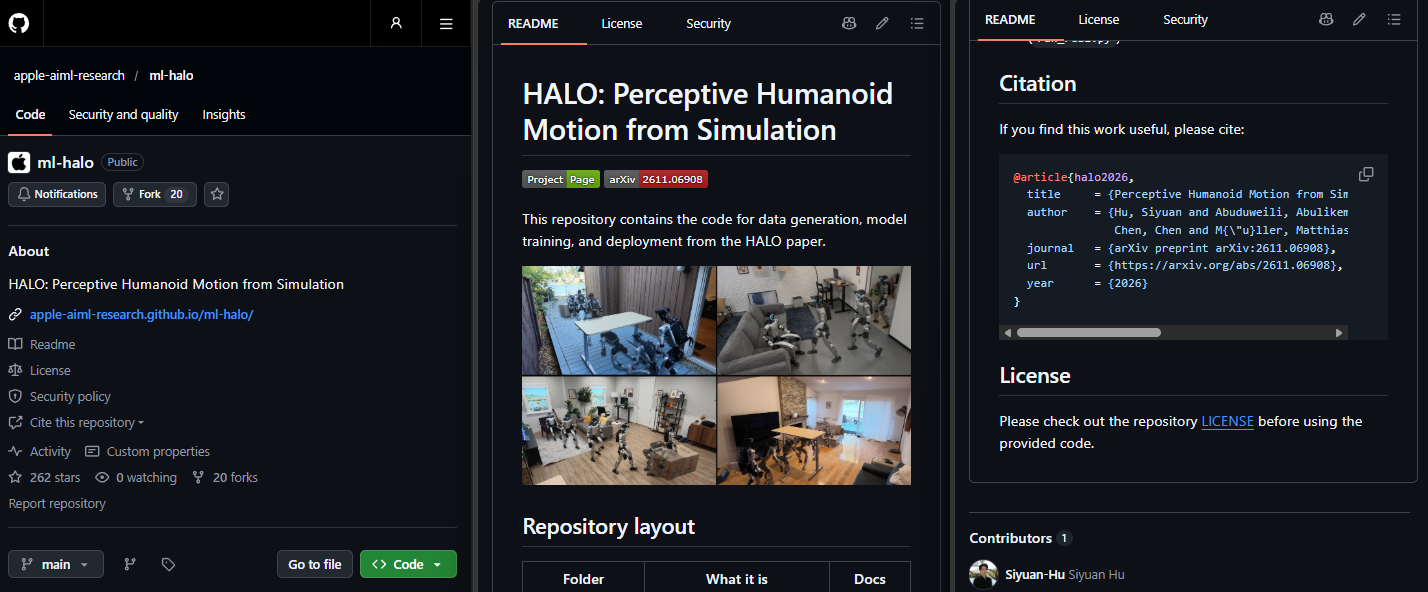
HALO: Apple trains a Unitree G1 humanoid on 296 hours of fully synthetic vision-language-motion data and reaches 91% in unseen real rooms

Apple's HALO (arXiv:2611.06908) generates whole-body motion with a diffusion model, places it in 1,000 procedural rooms, renders the robot's camera view, and trains a three-layer controller: VLM orchestrator, flow-matching motion generator, depth-based RL tracker. Six skills reach 91% in 360 real trials without teleoperation data; chained tasks drop to 50-100%. We explain the pipeline, the ablations and the statistics.

Verified5 min

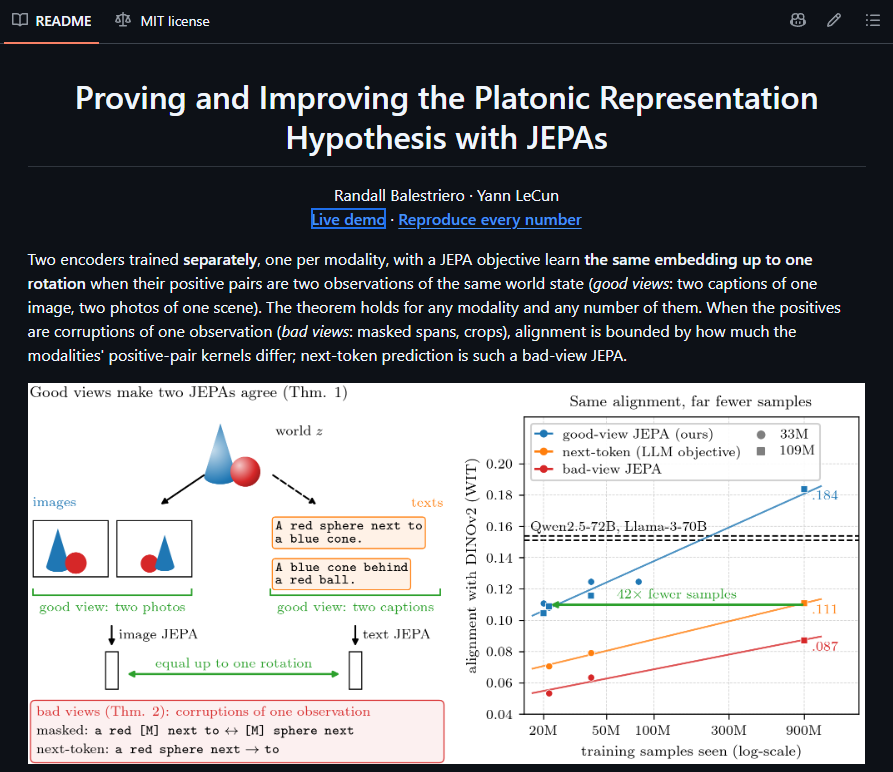
Balestriero and LeCun prove a version of the Platonic Representation Hypothesis for JEPAs, and call next-token prediction an inefficient route

A 29 October preprint proves that JEPAs trained separately on different modalities with 'good views' learn the same representation up to a rotation, and argues that next-token prediction uses 'bad views'. A 109M text JEPA aligned with image encoders better than language models up to 72B and needed 42x fewer samples. We explain good and bad views and recover the rotation in a numpy toy.

Verified4 min

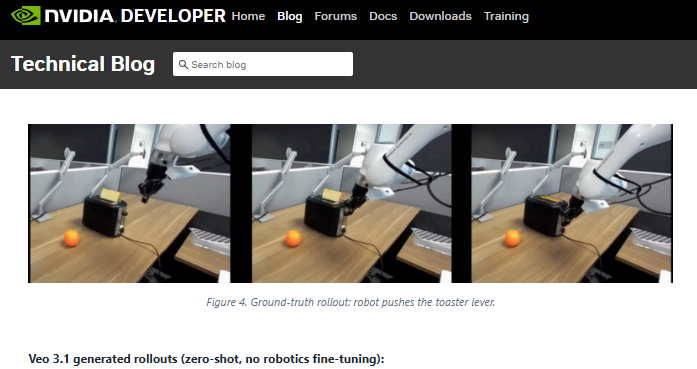
Explainer: vision-language-action models versus world-action models for robot control, and why latency is the price of world models

Robot foundation models either start from a vision-language model (VLA) or from a video world model (WAM). We explain both designs, the three ways WAMs output actions, the published RoboArena scores and latency numbers, how this week's AgiBot GO-3 and Neura Neuron AI announcements fit in, and simulate how latency and chunk length affect tracking.

Verified6 min

Muse Spark Open: Meta releases an 816B multimodal mixture-of-experts model with open weights

Meta published weights for Muse Spark Open (816B total, about 42B active parameters, 1M-token context, text, image, video and audio input). We explain the architecture from the model card, compute its weight and KV-cache memory, summarize the self-reported benchmarks and the license terms, and list what Meta has not published.