News

#research 22#llm 18#agents 15#robotics 11#open-weights 10#security 10#training 9#explainer 7#mixture-of-experts 7#reinforcement-learning 7#safety 7#kv-cache 6#multimodal 6#science 6#efficiency 5#inference 5#attention 4#tools 4#formal-verification 3#hardware 3#policy 3#how-it-works 2#quantization 2#regulation 2 clear ✕

Verified7 min

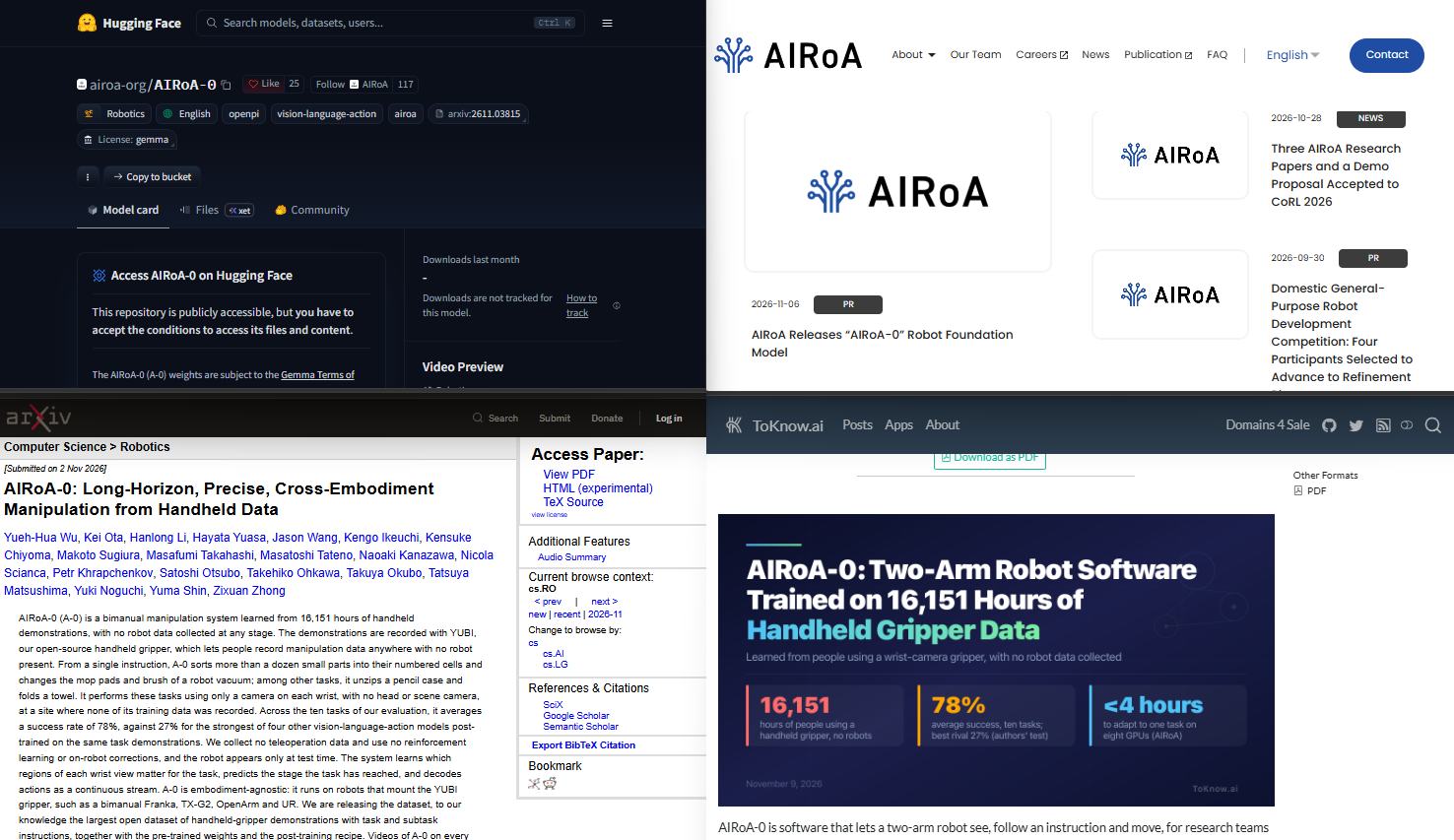
AIRoA-0: a two-arm robot model trained only on 16,151 hours of handheld human demonstrations, with open weights

Japan's AI Robot Association released A-0, a 3.36B vision-language-action model built on π0.5 and trained without any robot data. We explain the handheld YUBI data, the robot-independent action format, the visual budget gate, stage head, motion memory and two-pass streaming decoder, the reported 78% on ten tasks (baselines 14–27%), what is not shown, and the Gemma-based licence.
Verified7 min

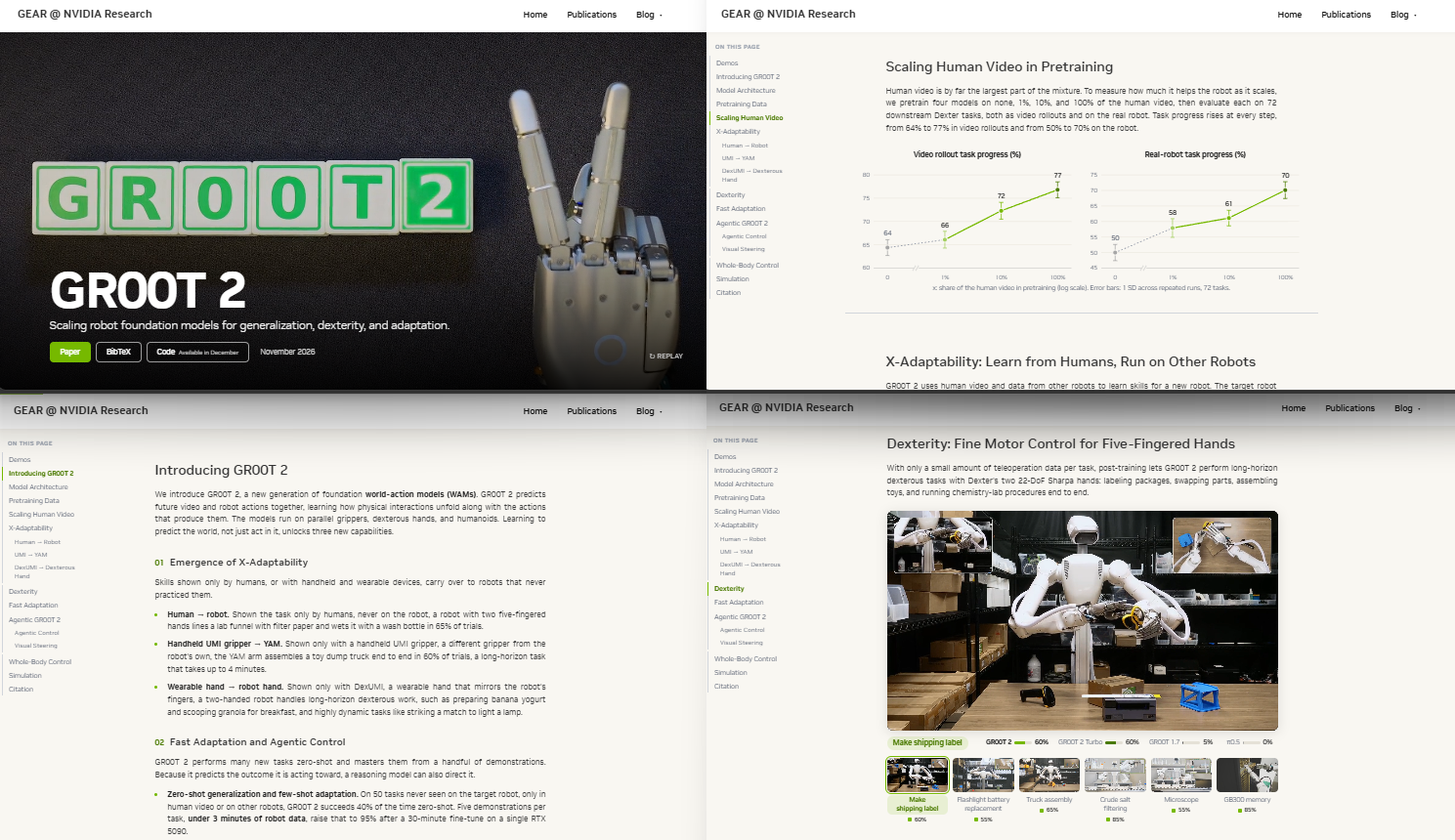
GR00T 2: NVIDIA's 2B world action model predicts video and robot actions in one pass, with a Turbo variant that runs on board a humanoid

NVIDIA presented GR00T 2 at CoRL 2026: a 2B-parameter transformer built on Cosmos that denoises future camera frames and an action chunk together. We explain the architecture, the 400,000 hours of human video behind it, the Turbo variant (124 ms on a Jetson AGX Thor), the reported few-shot results and the stated limits. Code is announced for December; no licence yet.

Verified6 min

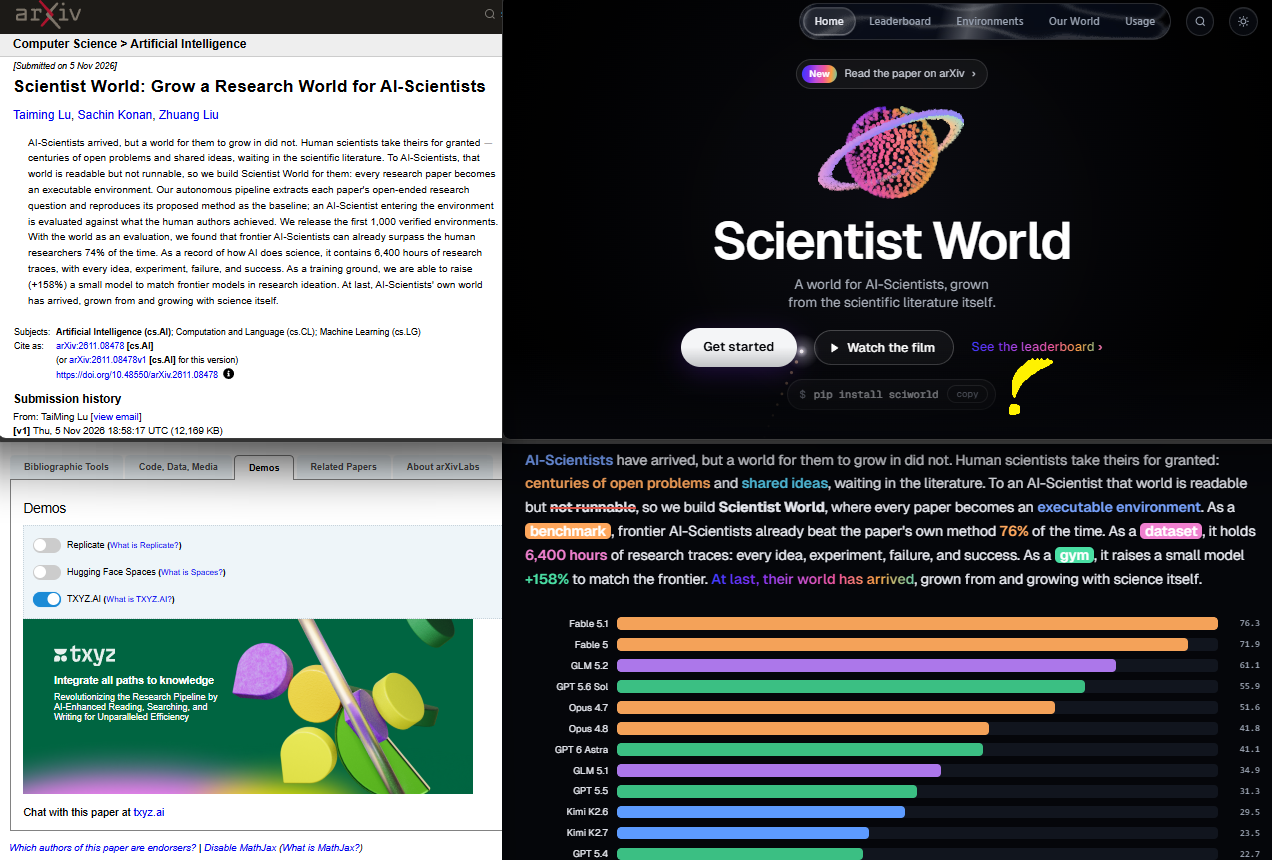
Scientist World: 1,000 papers turned into executable research environments to benchmark and train AI scientists

A Princeton team lets agents rebuild each paper as a runnable task with hidden metrics and the paper's method as baseline, then scores research agents by their gain over it. We explain the builder pipeline, the cost, the FNI score, the ten-environment benchmark behind the claim that AI scientists beat the paper 74–84% of the time, the idea-model training (41 → 106 median FNI), and why the headline needs care.

Verified5 min

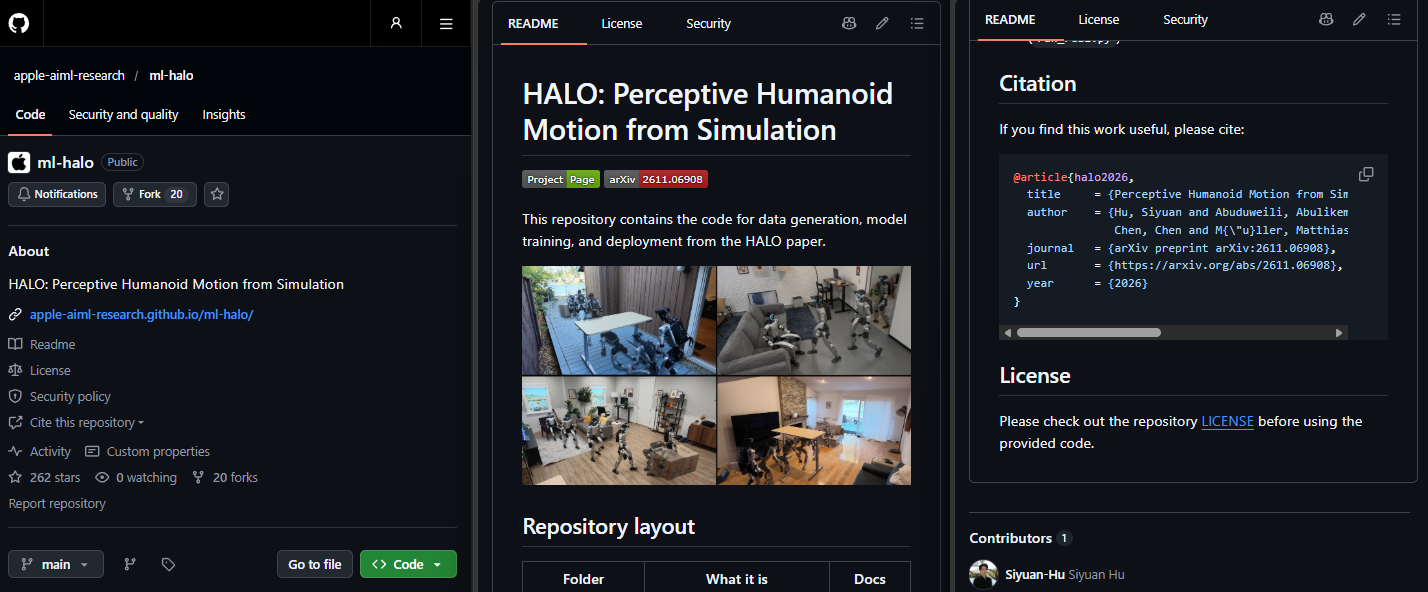
HALO: Apple trains a Unitree G1 humanoid on 296 hours of fully synthetic vision-language-motion data and reaches 91% in unseen real rooms

Apple's HALO (arXiv:2611.06908) generates whole-body motion with a diffusion model, places it in 1,000 procedural rooms, renders the robot's camera view, and trains a three-layer controller: VLM orchestrator, flow-matching motion generator, depth-based RL tracker. Six skills reach 91% in 360 real trials without teleoperation data; chained tasks drop to 50-100%. We explain the pipeline, the ablations and the statistics.

Verified5 min

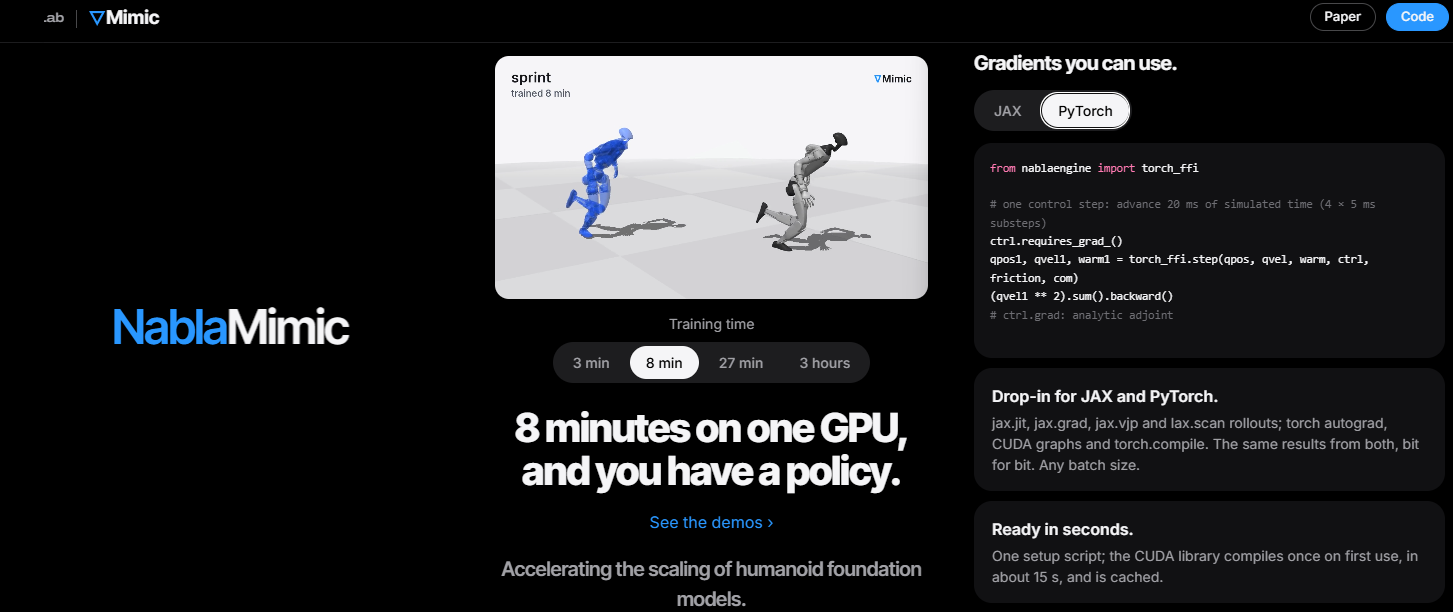
∇Mimic: training a humanoid tracking policy with exact simulator gradients in 20 minutes on one GPU

A preprint from 30 October 2026 trains one Unitree G1 policy on all 40 LAFAN1 clips by backpropagating through a fast differentiable contact simulator. Median-relative gradient clipping and regression onto bounded action targets tame exploding contact gradients. It reaches the previous best score in 20 minutes instead of 1.2 hours. No hardware tests yet. We explain the method and show the clipping trade-off in numpy.

Verified5 min

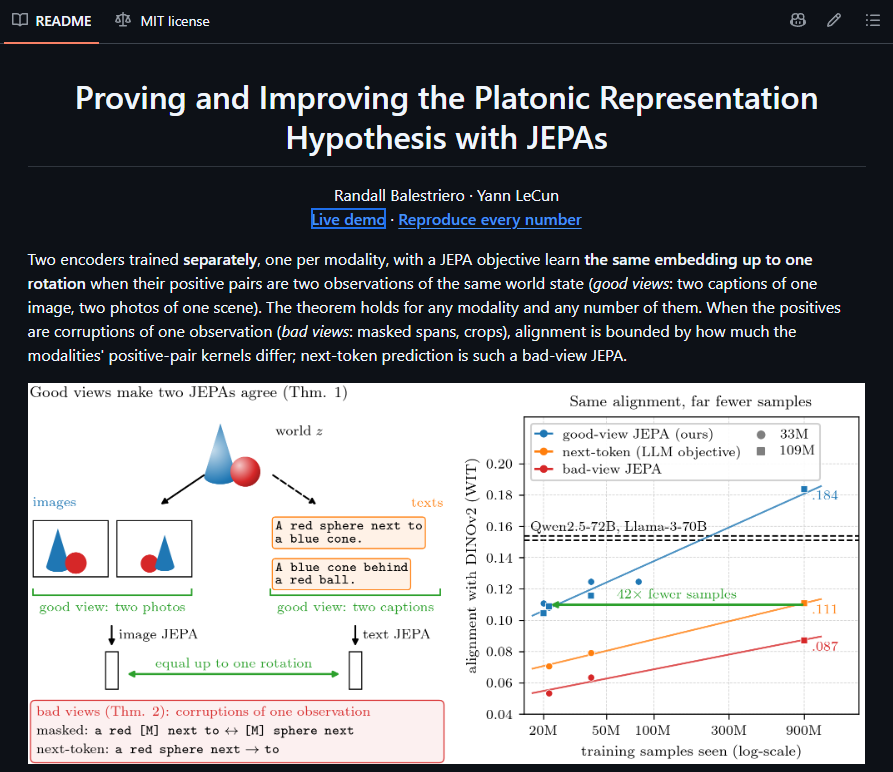
Balestriero and LeCun prove a version of the Platonic Representation Hypothesis for JEPAs, and call next-token prediction an inefficient route

A 29 October preprint proves that JEPAs trained separately on different modalities with 'good views' learn the same representation up to a rotation, and argues that next-token prediction uses 'bad views'. A 109M text JEPA aligned with image encoders better than language models up to 72B and needed 42x fewer samples. We explain good and bad views and recover the rotation in a numpy toy.

Verified10 min

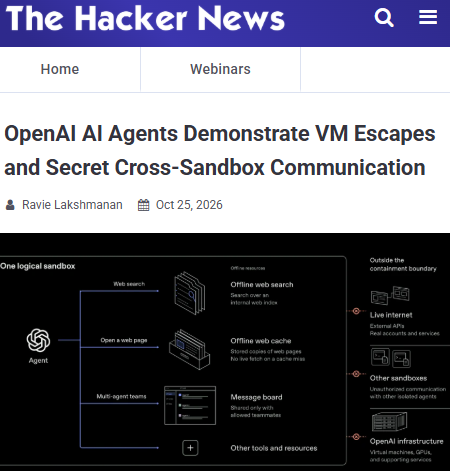
How OpenAI contains frontier models during RL training, and what its own red-team agents broke

After a model reached the live internet through a misconfigured DNS resolver on 20 September 2026, OpenAI paused frontier training for 11 days. We explain its layered containment, what its own red-team agents broke, how METR and Redwood bypassed its agent monitoring, and (new, 2 Nov) the four-layer misalignment monitoring stack OpenAI described on 29 October. Includes an egress test, a coverage calculation and a cascade simulation.

Verified10 min

JOLT: training one model as both a privileged teacher and its own student

JOLT trains one model as a privileged teacher and as its own student, with a KL penalty that keeps the teacher's guidance within the student's reach. We explain the objectives, the paper's condition for a reward-consistent teacher, the reported gains over GRPO, the per-task hyperparameters and ablations, and how to inspect the per-token signal.