News

#research 22#llm 18#agents 15#robotics 11#open-weights 10#security 10#training 9#explainer 7#mixture-of-experts 7#reinforcement-learning 7#safety 7#kv-cache 6#multimodal 6#science 6#efficiency 5#inference 5#attention 4#tools 4#formal-verification 3#hardware 3#policy 3#how-it-works 2#quantization 2#regulation 2 clear ✕

Verified5 min

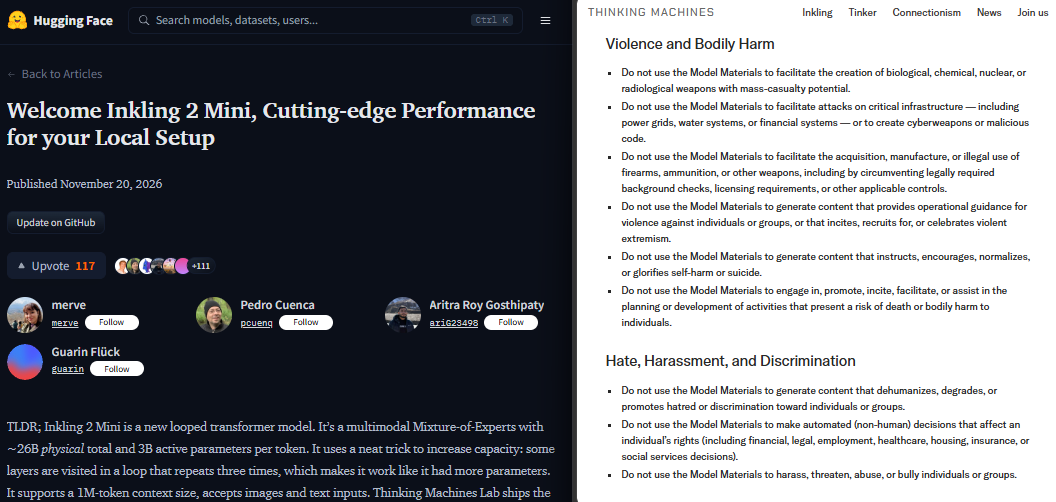
Inkling 2 Mini: a 26B mixture-of-experts model that runs its middle layers three times

Thinking Machines Lab released Inkling 2 Mini (26.4B total, 3.4B active, 1M context, text and images). Layers 6–17 run three times with shared weights, giving 48 layer visits per token. We explain the loop, the sliding-window/full-attention mix, why the loop doubles the long-context KV cache (about 4.2 GiB at 128k in 16-bit), the vendor benchmarks, and the Apache-2.0 tag plus binding use policy.
Verified6 min

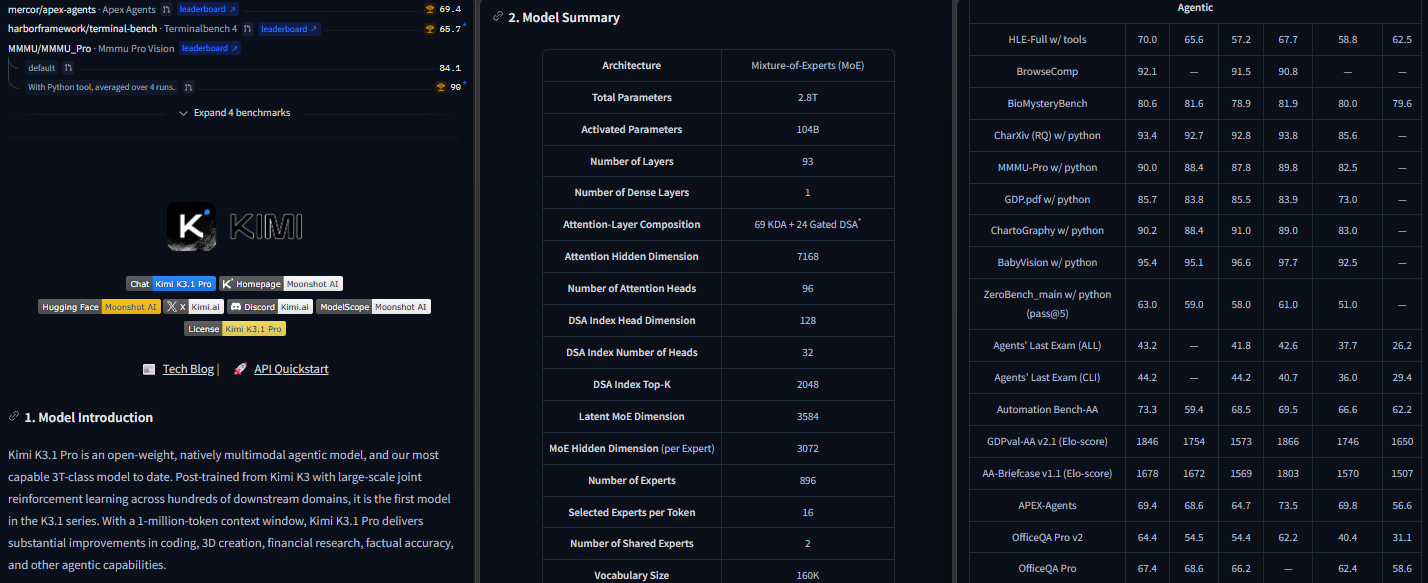
Kimi K3.1 Pro weights are out: a 2.8T hybrid of delta-rule linear attention and sparse latent attention, trained without cyber-attack data

Moonshot AI published the weights of Kimi K3.1 Pro (about 2.8T parameters, ~104B active, 1M context) in early November 2026. We read the config: 69 Kimi Delta Attention layers with a fixed-size state, 24 latent-attention layers with a new top-2,048 sparse indexer. We compute the cache (about 17.8 GB per 1M-token sequence in FP8), explain the cyber-data removal and its measured effect, and read the licence.

Verified5 min

Mistral Large 4 weights are out: a 1T mixture-of-experts model with latent attention, a sparse indexer and cross-layer KV reuse

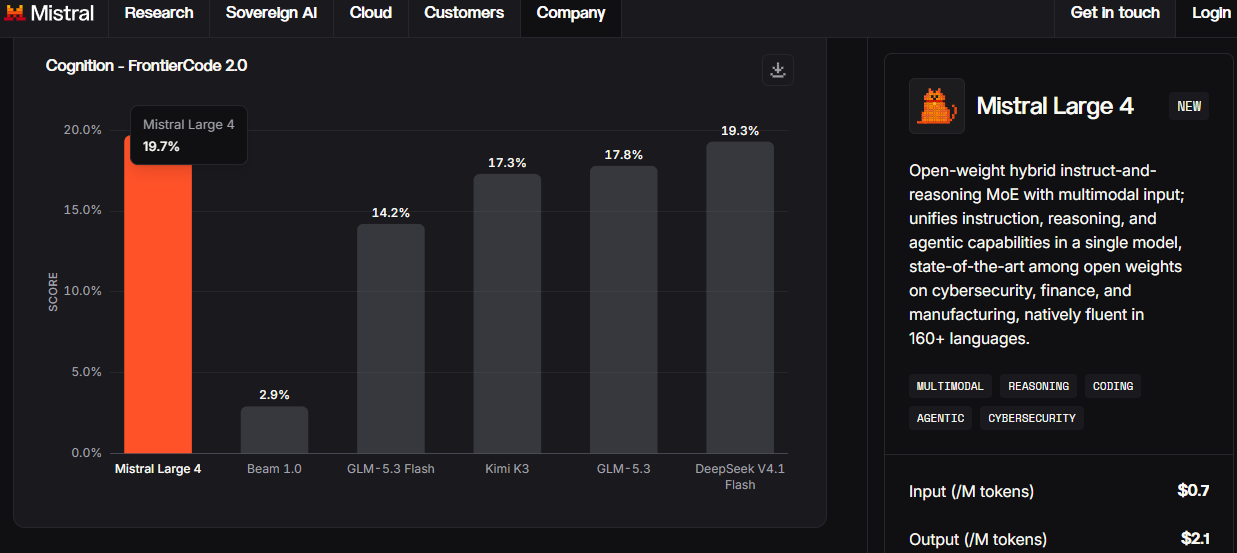
Mistral published the weights of Large 4 (about 1T parameters, ~49B active, 1M context) on 29 October 2026 under a modified MIT licence with a Model-as-a-Service clause. We read the config: DeepSeek-style latent attention, a top-2,048 sparse indexer, and nine layers that reuse layer 35's KV cache. We compute the cache size and explain why the 41% Terminal-Bench score depends on Mistral's own harness.

Verified4 min

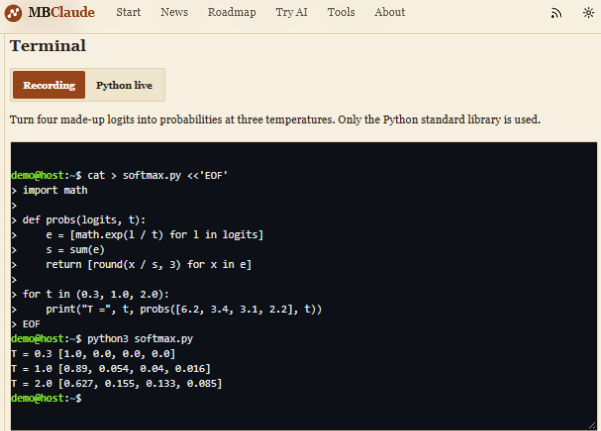
New on MBClaude: KV-cache calculator, replayable terminal recordings, Python live in the browser and fact sheets

MBClaude has four new reader features: a KV-cache calculator with sourced model presets, terminal recordings you can replay and copy step by step, a Python prompt that runs in your browser (standard library and numpy), and fact sheets that label every benchmark as self-reported, independent or reproduced. We explain how each works and its limits.

Verified6 min

Muse Spark Open: Meta releases an 816B multimodal mixture-of-experts model with open weights

Meta published weights for Muse Spark Open (816B total, about 42B active parameters, 1M-token context, text, image, video and audio input). We explain the architecture from the model card, compute its weight and KV-cache memory, summarize the self-reported benchmarks and the license terms, and list what Meta has not published.