News

#research 22#llm 18#agents 15#robotics 11#open-weights 10#security 10#training 9#explainer 7#mixture-of-experts 7#reinforcement-learning 7#safety 7#kv-cache 6#multimodal 6#science 6#efficiency 5#inference 5#attention 4#tools 4#formal-verification 3#hardware 3#policy 3#how-it-works 2#quantization 2#regulation 2 clear ✕

Verified5 min

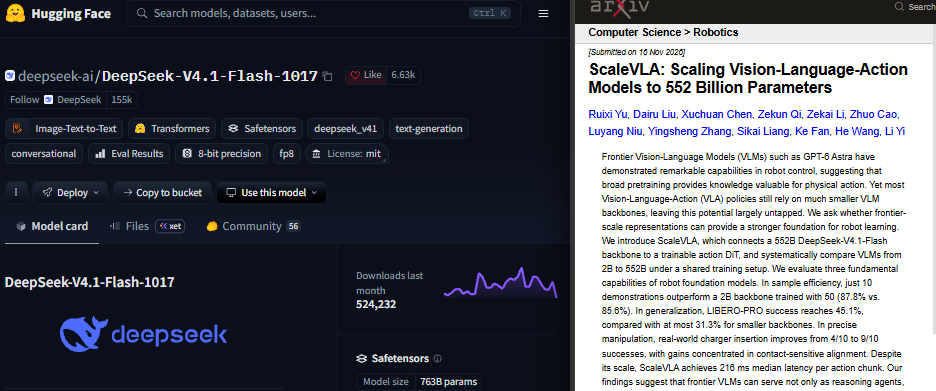
ScaleVLA: a robot policy on a frozen 552B mixture-of-experts backbone

Researchers from Tsinghua, Peking University, SJTU and Galbot attached a GR00T-style flow-matching action head to the frozen 552B DeepSeek-V4.1-Flash-1017 model. They report gains over 2B–32B backbones on LIBERO, LIBERO-PRO, RoboCasa and DexJoCo, largest with 5–10 demonstrations, at 216 ms per action chunk on four H200 GPUs. We explain the design, the numbers and what is missing.
Verified7 min

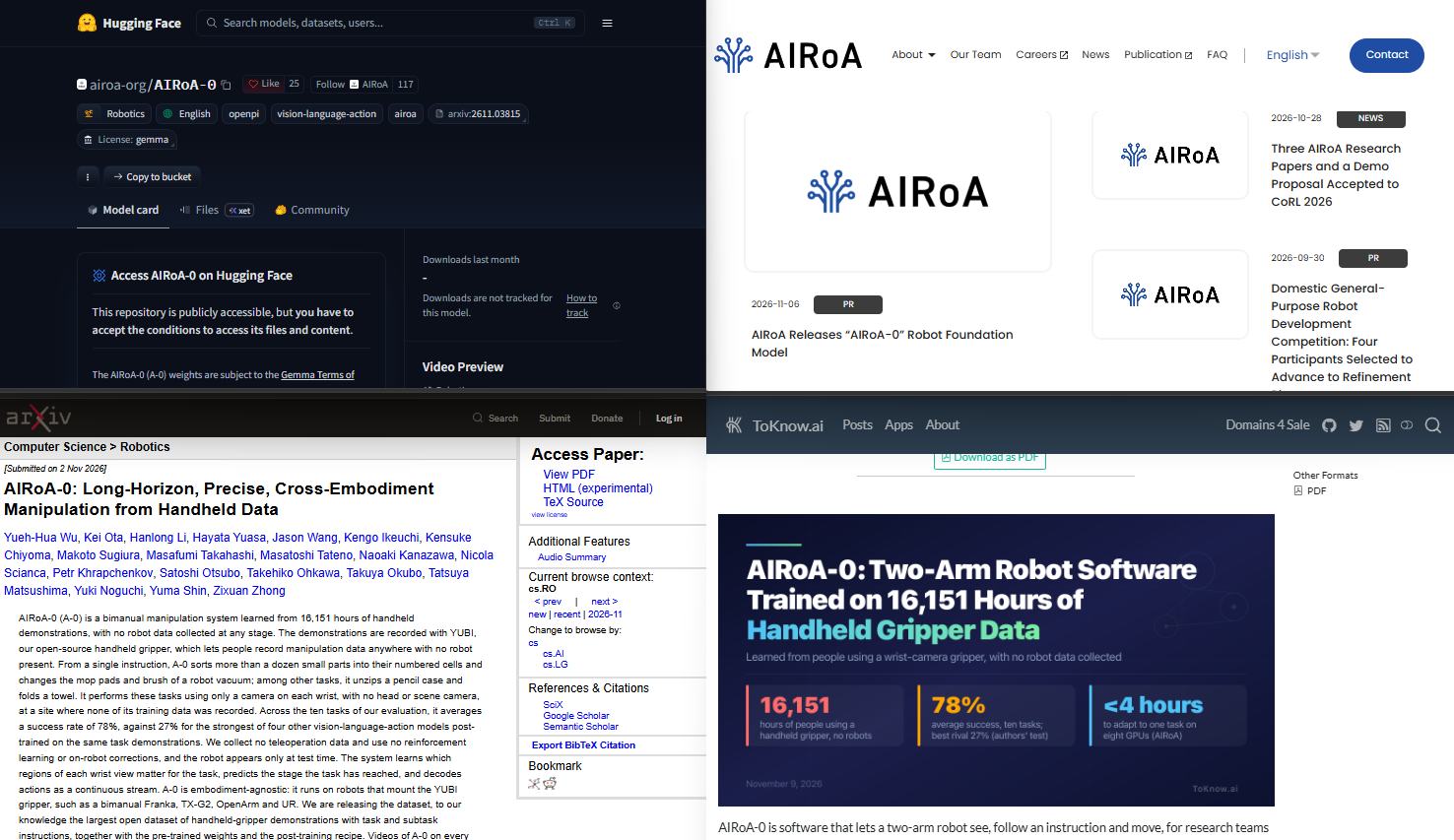
AIRoA-0: a two-arm robot model trained only on 16,151 hours of handheld human demonstrations, with open weights

Japan's AI Robot Association released A-0, a 3.36B vision-language-action model built on π0.5 and trained without any robot data. We explain the handheld YUBI data, the robot-independent action format, the visual budget gate, stage head, motion memory and two-pass streaming decoder, the reported 78% on ten tasks (baselines 14–27%), what is not shown, and the Gemma-based licence.

Verified7 min

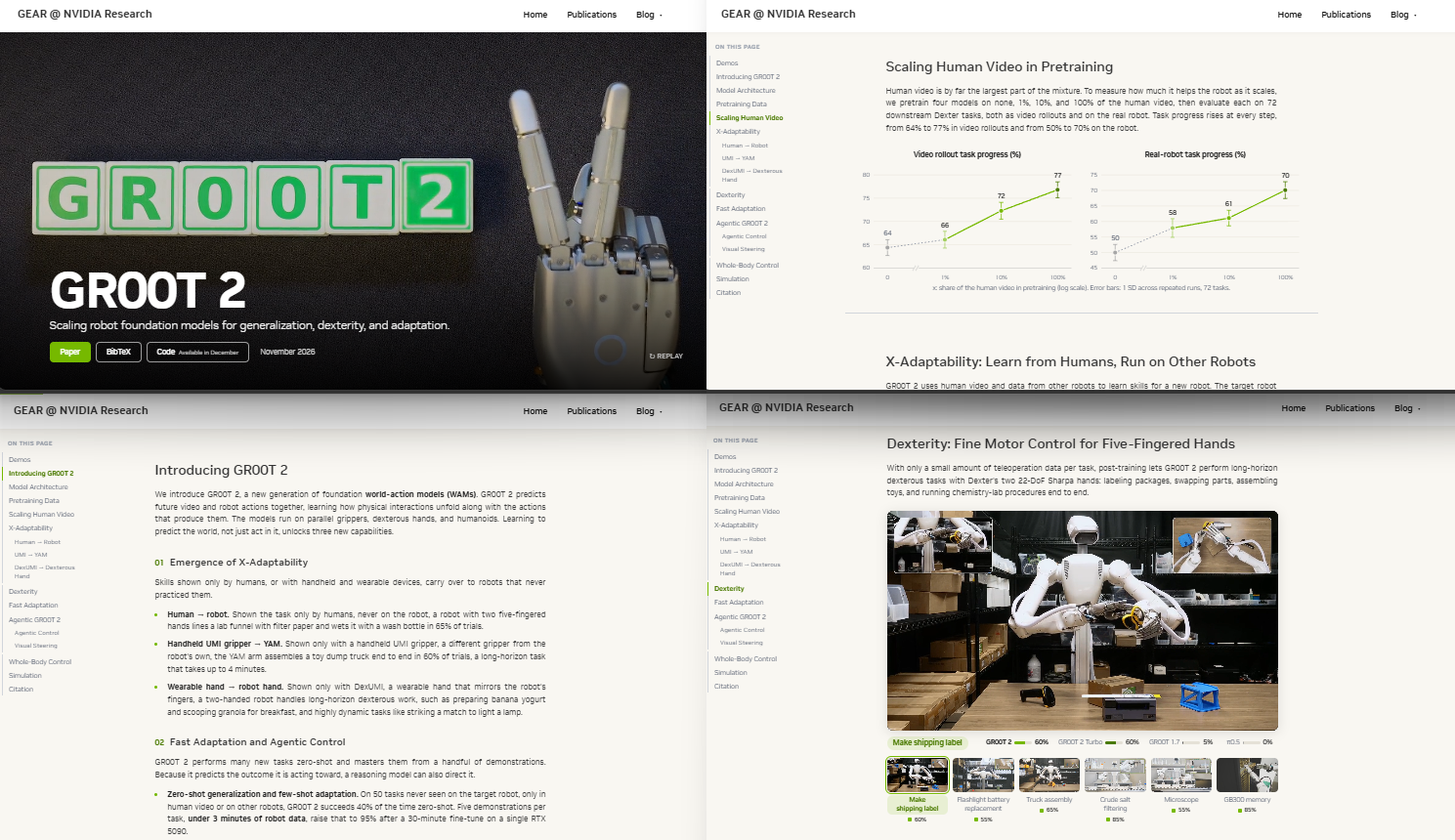
GR00T 2: NVIDIA's 2B world action model predicts video and robot actions in one pass, with a Turbo variant that runs on board a humanoid

NVIDIA presented GR00T 2 at CoRL 2026: a 2B-parameter transformer built on Cosmos that denoises future camera frames and an action chunk together. We explain the architecture, the 400,000 hours of human video behind it, the Turbo variant (124 ms on a Jetson AGX Thor), the reported few-shot results and the stated limits. Code is announced for December; no licence yet.

Verified5 min

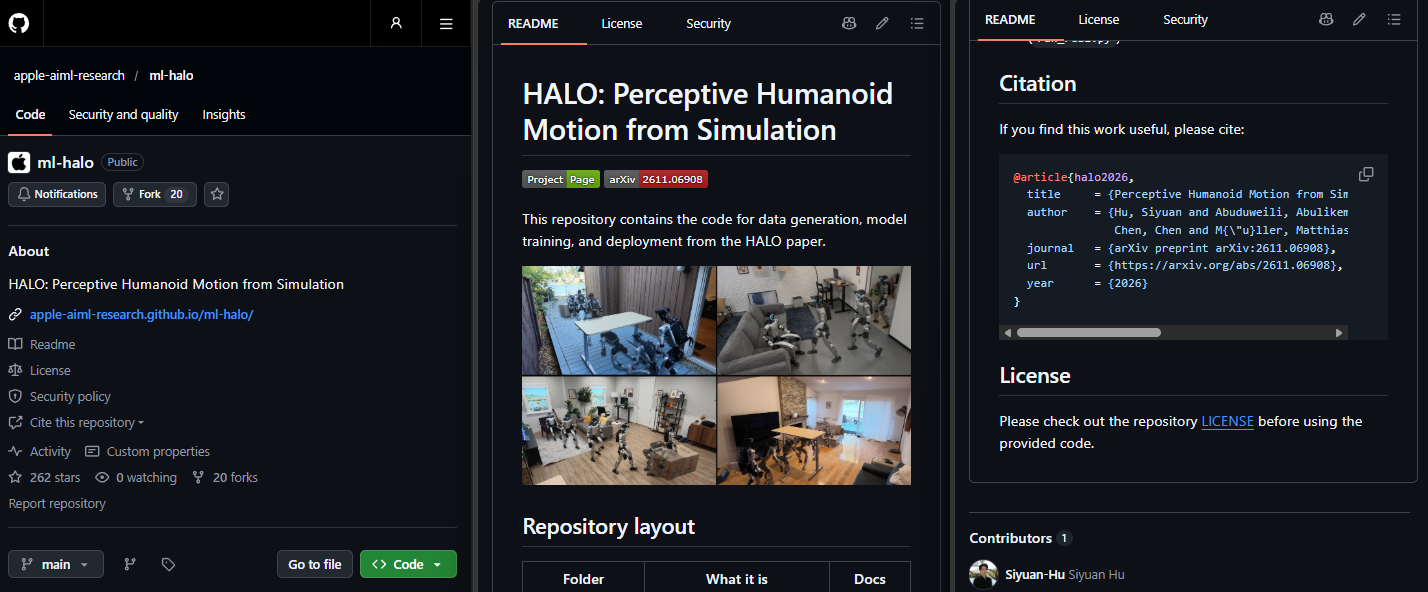
HALO: Apple trains a Unitree G1 humanoid on 296 hours of fully synthetic vision-language-motion data and reaches 91% in unseen real rooms

Apple's HALO (arXiv:2611.06908) generates whole-body motion with a diffusion model, places it in 1,000 procedural rooms, renders the robot's camera view, and trains a three-layer controller: VLM orchestrator, flow-matching motion generator, depth-based RL tracker. Six skills reach 91% in 360 real trials without teleoperation data; chained tasks drop to 50-100%. We explain the pipeline, the ablations and the statistics.

Verified4 min

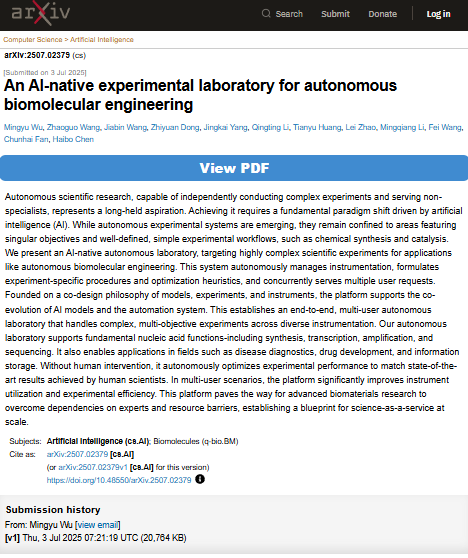
AutoDNA in Nature: LLM agents that write their own instrument drivers and schedule a shared DNA lab

A Shanghai Jiao Tong University team published AutoDNA in Nature on 5 November 2026: planner, literature, reagent, coding and execution agents run nucleic-acid experiments on 20+ instrument types, turn manuals into callable 'atomic services', and share hardware between users. Reported: ~98% stepwise synthesis yield, a full DNA data-storage cycle, ~3x throughput. We explain the architecture, compare preprint and journal numbers, and list what is missing.

Verified5 min

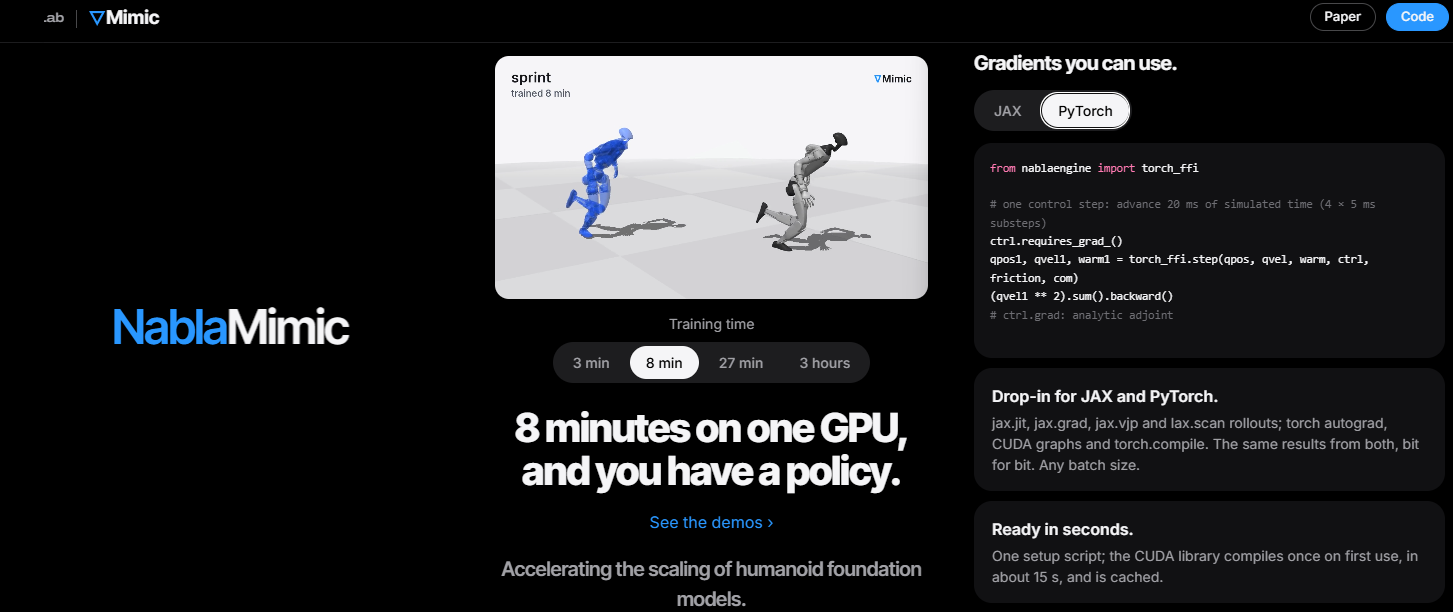
∇Mimic: training a humanoid tracking policy with exact simulator gradients in 20 minutes on one GPU

A preprint from 30 October 2026 trains one Unitree G1 policy on all 40 LAFAN1 clips by backpropagating through a fast differentiable contact simulator. Median-relative gradient clipping and regression onto bounded action targets tame exploding contact gradients. It reaches the previous best score in 20 minutes instead of 1.2 hours. No hardware tests yet. We explain the method and show the clipping trade-off in numpy.

Likely5 min

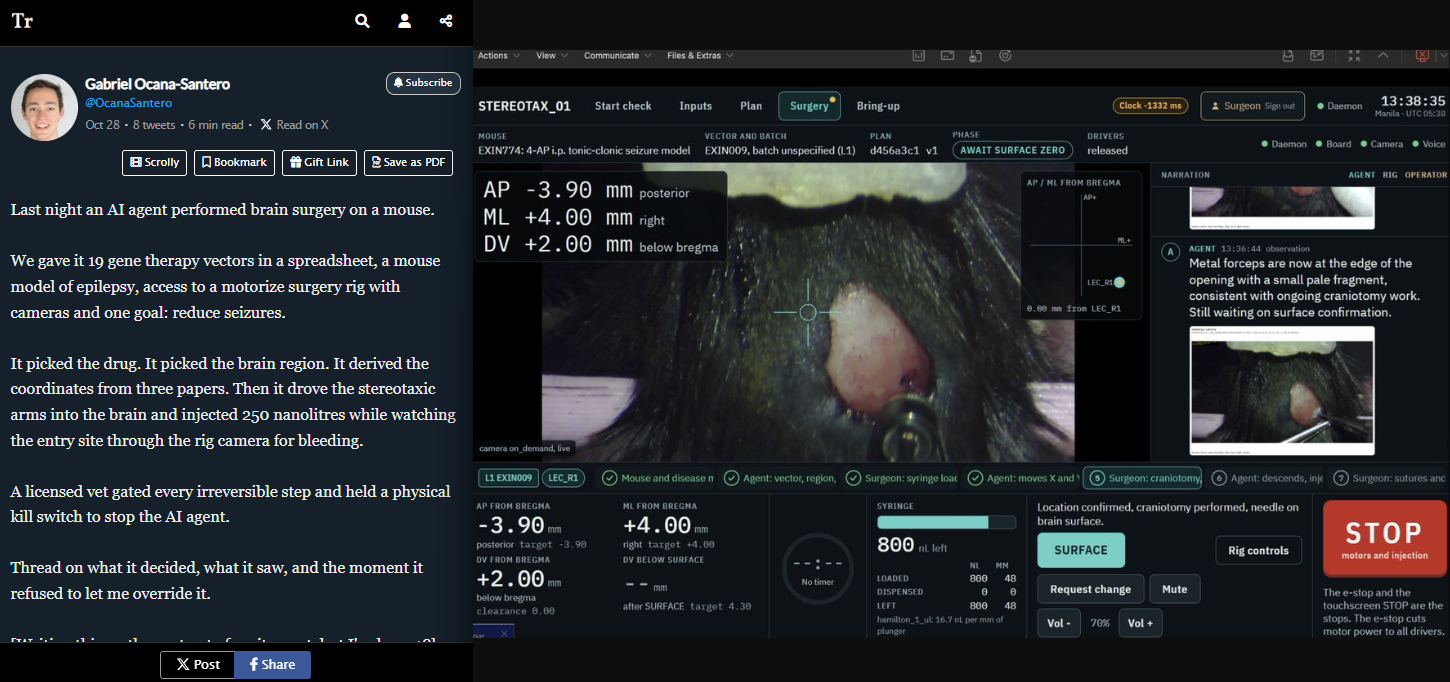
Safety gates for AI agents that control lab hardware: the Safe-SDL proposal, and an unverified agent-run mouse injection

A 27 October preprint proposes an auditable self-driving lab: a model that emits robot motions and typed instrument calls, a causal event log, and a runtime gate that checks schemas and monitors a signal-temporal-logic safety margin. No experiments yet. A self-reported X thread describes a Claude agent injecting gene therapy into a live mouse under vet supervision; it is unverified. We compare the safety designs and code a small gate.

Likely4 min

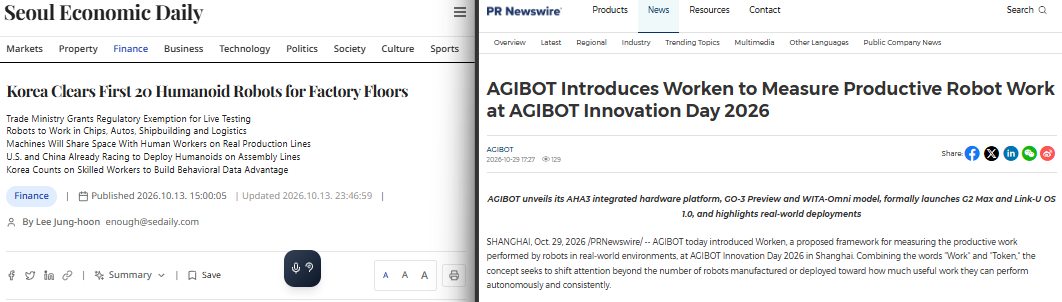
Humanoids in factories, October 2026: Korea's sandbox test, Neura's RoboGym, Hyundai's 2032 horizon and AgiBot's Worken metric

Korea approved 20 Robros humanoids for work next to people, Neura and TUM opened a 17-million-euro training centre, Hyundai put humanoids in new plants after 2032, and AgiBot proposed a metric for autonomous robot work. We explain the safety-rule bottleneck, how real-task training data is collected, the Worken formula and its weaknesses, and what is still not measured.

Verified4 min

NVIDIA's reference humanoid Agile ONE SN, Isaac Lab 3.0 and GR00T 1.7 RL workflows: what was announced at GTC Berlin

NVIDIA and Agile Robots plan a reference humanoid with two 20-DoF hands and 1 kHz force control for early 2027; Isaac Lab 3.0 is generally available, with open workflows to refine GR00T 1.7 by reinforcement learning. We list the stated specifications, what is open and what is unknown, and show with a small simulation why stiff contacts need fast force loops.

Verified5 min

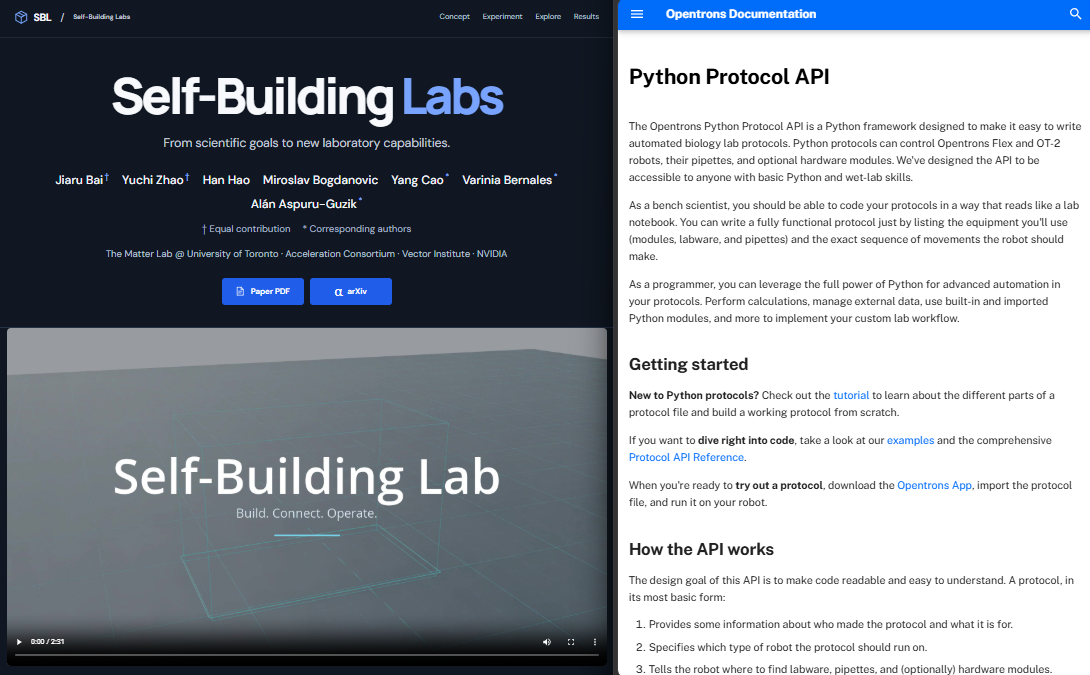
Self-Building Labs: AI agents that design, simulate and program their own self-driving chemistry lab

Aspuru-Guzik's group describes a system that turns a scientific goal into a lab layout, an Isaac Sim digital twin, robot skills and a frozen Opentrons workflow, validated with a real CdS quantum-dot synthesis. We explain the agents, the sim-to-real steps, what the paper does not report, and show how to simulate and hash-freeze a protocol yourself.

Verified4 min

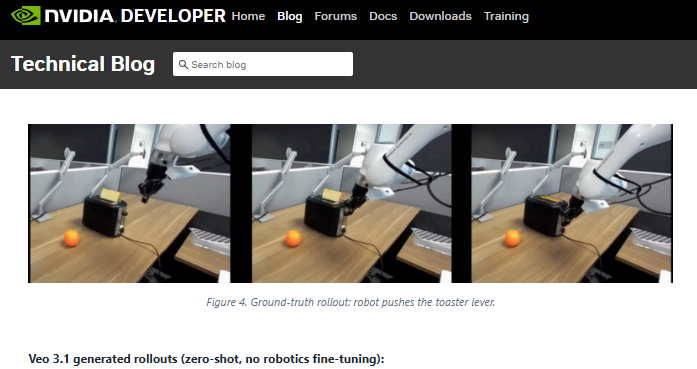
Explainer: vision-language-action models versus world-action models for robot control, and why latency is the price of world models

Robot foundation models either start from a vision-language model (VLA) or from a video world model (WAM). We explain both designs, the three ways WAMs output actions, the published RoboArena scores and latency numbers, how this week's AgiBot GO-3 and Neura Neuron AI announcements fit in, and simulate how latency and chunk length affect tracking.