News

#research 22#llm 18#agents 15#robotics 11#open-weights 10#security 10#training 9#explainer 7#mixture-of-experts 7#reinforcement-learning 7#safety 7#kv-cache 6#multimodal 6#science 6#efficiency 5#inference 5#attention 4#tools 4#formal-verification 3#hardware 3#policy 3#how-it-works 2#quantization 2#regulation 2 clear ✕

Verified5 min

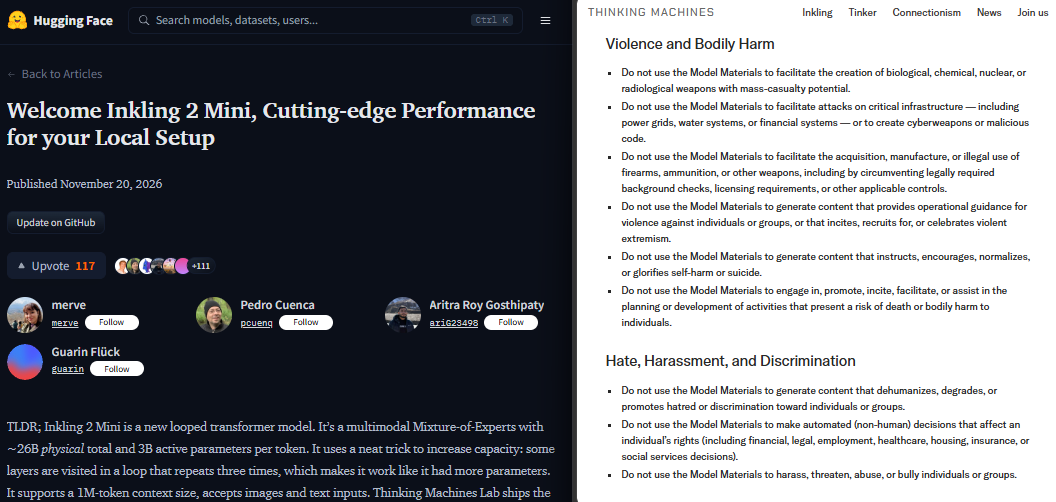
Inkling 2 Mini: a 26B mixture-of-experts model that runs its middle layers three times

Thinking Machines Lab released Inkling 2 Mini (26.4B total, 3.4B active, 1M context, text and images). Layers 6–17 run three times with shared weights, giving 48 layer visits per token. We explain the loop, the sliding-window/full-attention mix, why the loop doubles the long-context KV cache (about 4.2 GiB at 128k in 16-bit), the vendor benchmarks, and the Apache-2.0 tag plus binding use policy.
Verified6 min

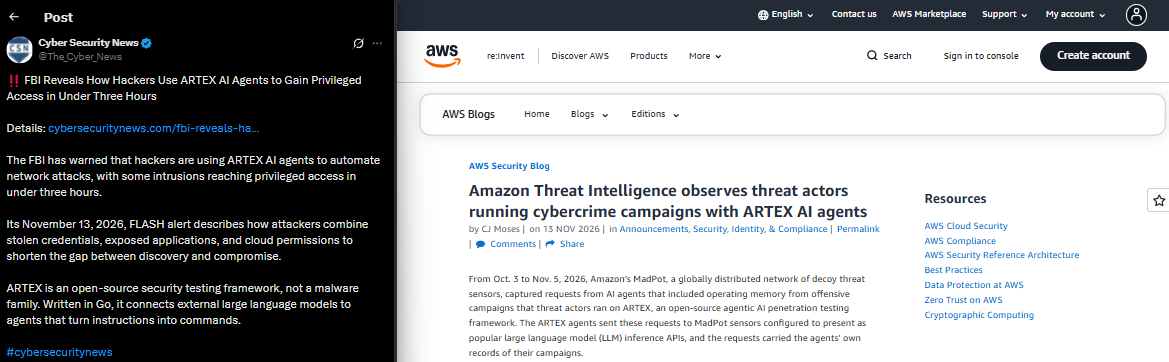
ARTEX: the FBI and Amazon describe intrusions run by LLM agents, from stolen AI keys to under three hours to privileged access

An FBI FLASH alert and an Amazon threat report (both 13 Nov 2026) document real intrusions driven by ARTEX, an open-source multi-agent penetration-testing framework. We explain its planner, worker, verifier and memory design, the two campaigns Amazon recorded (theft of LLM API keys, deepfakes against identity checks), the numbers and their confidence, and what defenders can check, with a recorded secret-scanning workflow.

Verified6 min

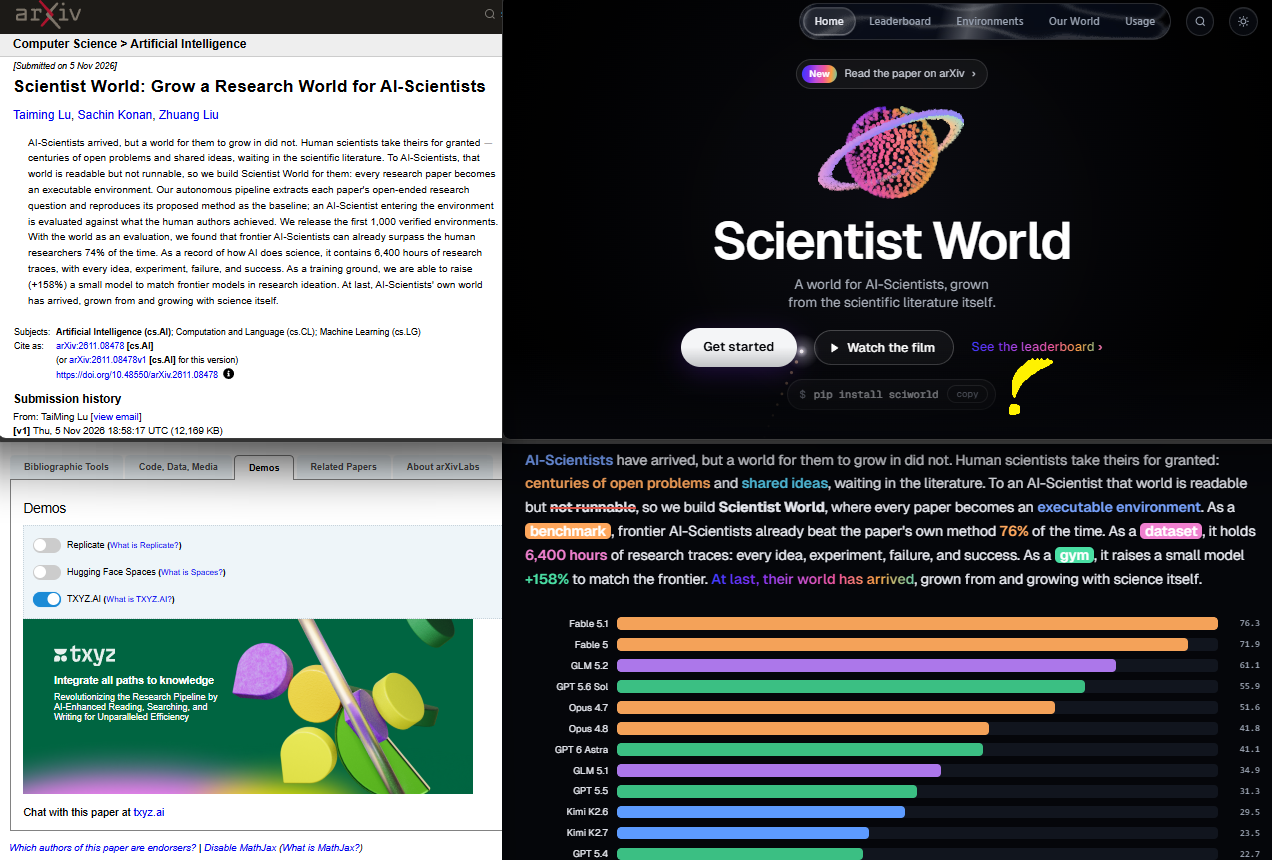
Scientist World: 1,000 papers turned into executable research environments to benchmark and train AI scientists

A Princeton team lets agents rebuild each paper as a runnable task with hidden metrics and the paper's method as baseline, then scores research agents by their gain over it. We explain the builder pipeline, the cost, the FNI score, the ten-environment benchmark behind the claim that AI scientists beat the paper 74–84% of the time, the idea-model training (41 → 106 median FNI), and why the headline needs care.

Verified6 min

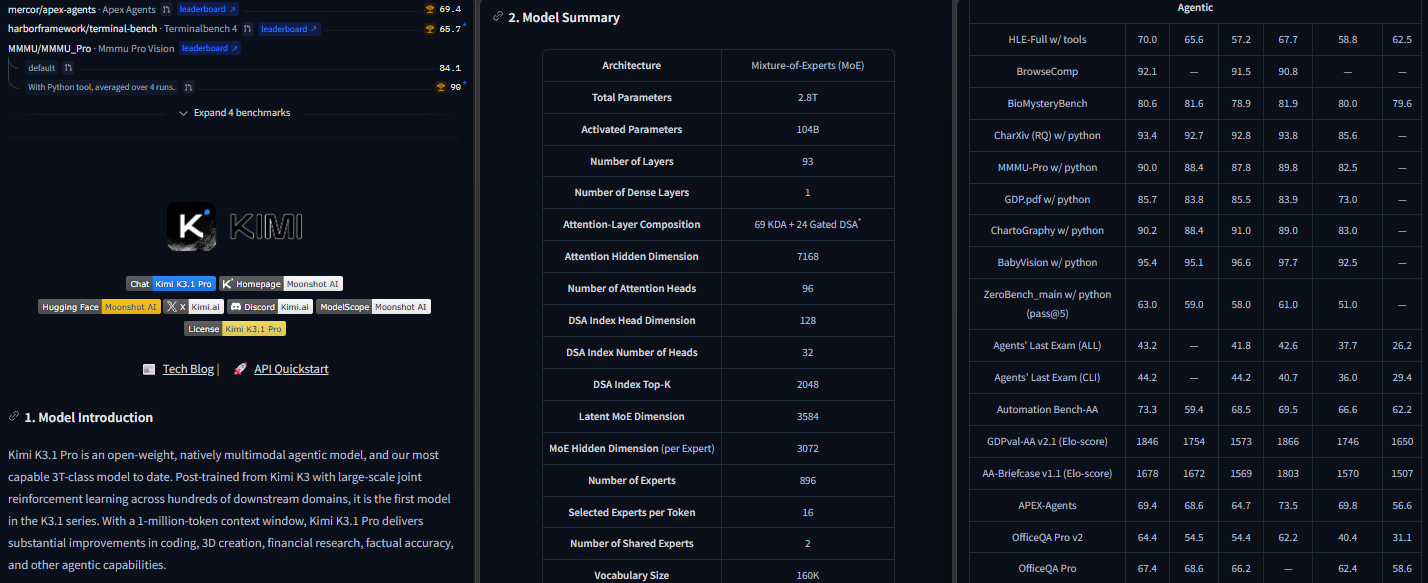
Kimi K3.1 Pro weights are out: a 2.8T hybrid of delta-rule linear attention and sparse latent attention, trained without cyber-attack data

Moonshot AI published the weights of Kimi K3.1 Pro (about 2.8T parameters, ~104B active, 1M context) in early November 2026. We read the config: 69 Kimi Delta Attention layers with a fixed-size state, 24 latent-attention layers with a new top-2,048 sparse indexer. We compute the cache (about 17.8 GB per 1M-token sequence in FP8), explain the cyber-data removal and its measured effect, and read the licence.

Verified5 min

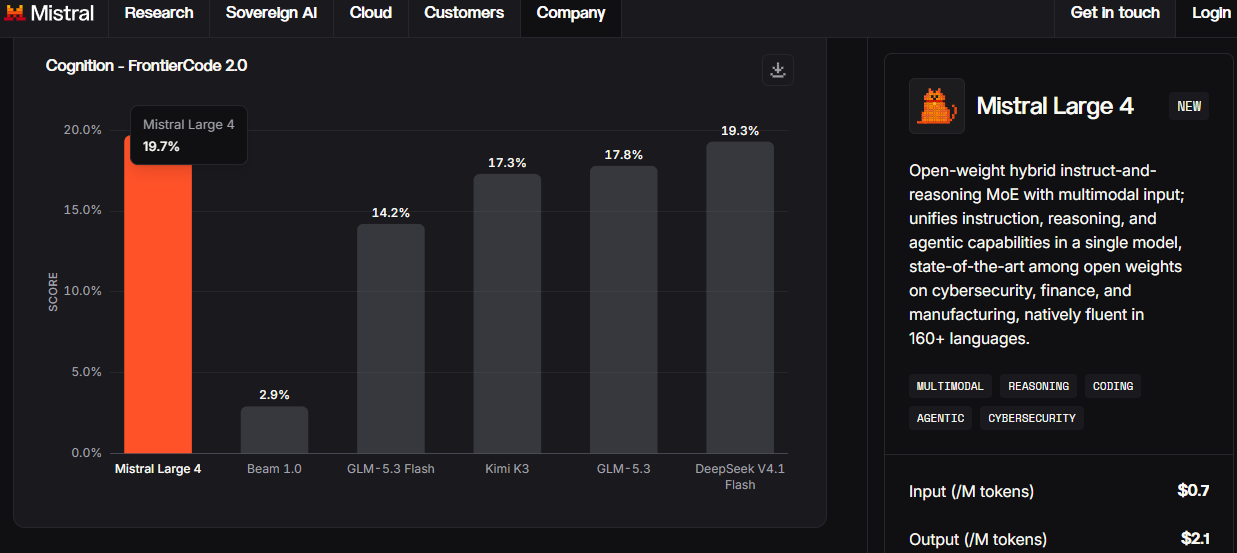
Mistral Large 4 weights are out: a 1T mixture-of-experts model with latent attention, a sparse indexer and cross-layer KV reuse

Mistral published the weights of Large 4 (about 1T parameters, ~49B active, 1M context) on 29 October 2026 under a modified MIT licence with a Model-as-a-Service clause. We read the config: DeepSeek-style latent attention, a top-2,048 sparse indexer, and nine layers that reuse layer 35's KV cache. We compute the cache size and explain why the 41% Terminal-Bench score depends on Mistral's own harness.

Verified5 min

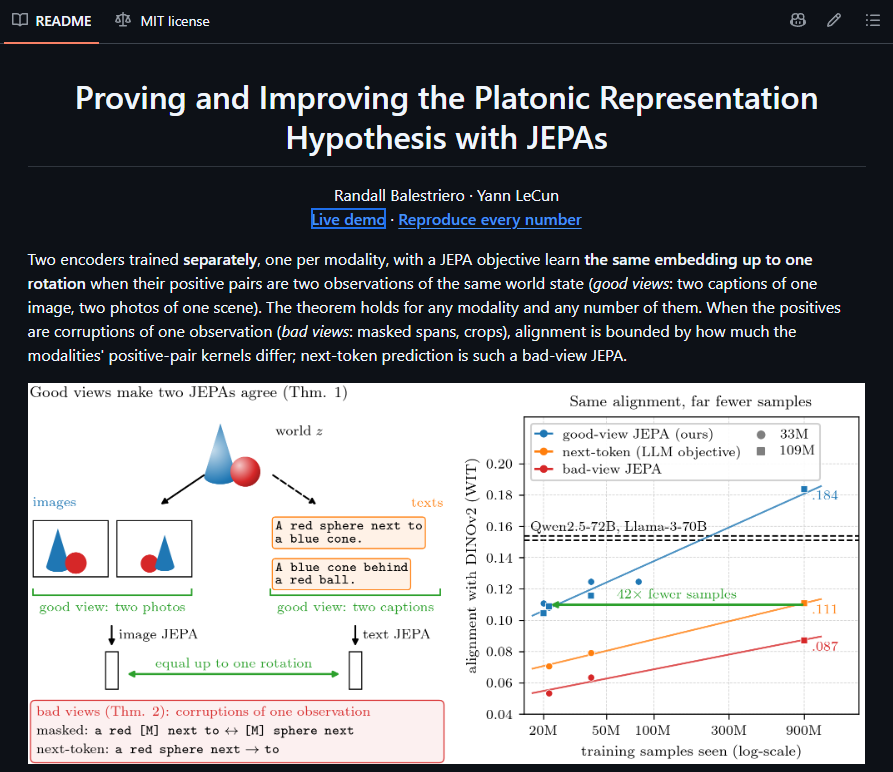
Balestriero and LeCun prove a version of the Platonic Representation Hypothesis for JEPAs, and call next-token prediction an inefficient route

A 29 October preprint proves that JEPAs trained separately on different modalities with 'good views' learn the same representation up to a rotation, and argues that next-token prediction uses 'bad views'. A 109M text JEPA aligned with image encoders better than language models up to 72B and needed 42x fewer samples. We explain good and bad views and recover the rotation in a numpy toy.

Verified9 min

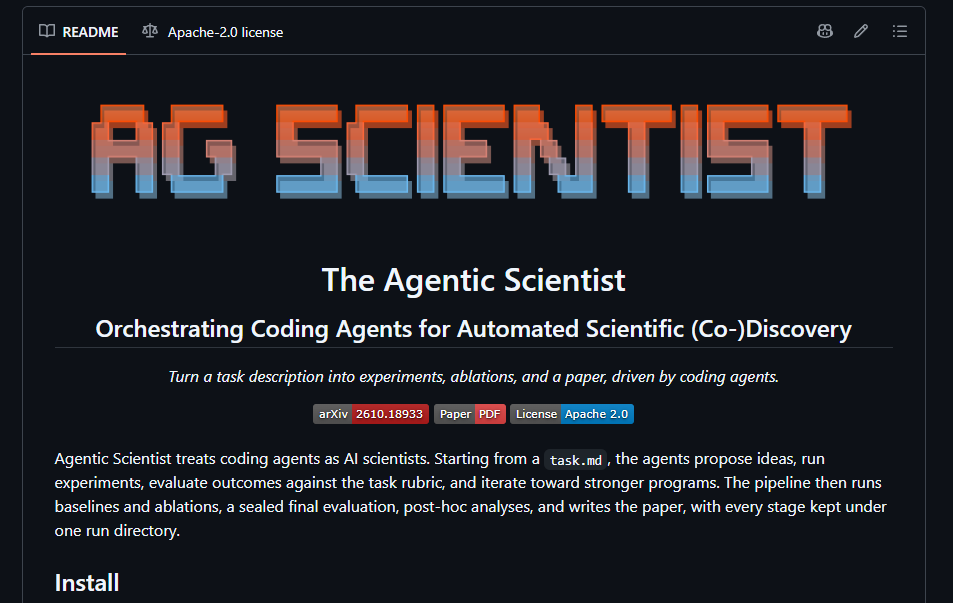
The Agentic Scientist: Sakana AI orchestrates Claude Code, Codex and other coding agents through a staged research loop

Sakana AI's successor to the AI Scientist runs coding agents in parallel through task drafting, ideation, experiments, ablations and paper writing, with rubric checks at each stage. We explain the pipeline, the 70-campaign model comparison and the case studies, and (updated 9 Nov) what the released code really does: task contract, deterministic rubrics, single-run selection, evidence checks and sandbox defaults.

Verified5 min

CVE-2026-111497: an out-of-bounds write in the Brotli decoder, reported by OpenAI Codex Security, hits Node.js, Bun, Envoy and Python clients

A malformed Brotli stream could make Google's C decoder write past an eight-byte internal buffer. Fixes shipped on 21 October 2026 in Brotli 1.0.10/1.1.1/1.2.1, Node.js 22.23.4/24.22.1/26.12.1, Bun 1.4.4, Envoy and Istio. We explain the bug, who is exposed (fetch, body parsers, Python HTTP clients), what is unknown about the AI role, and how to check your runtime.

Verified10 min

JOLT: training one model as both a privileged teacher and its own student

JOLT trains one model as a privileged teacher and as its own student, with a KL penalty that keeps the teacher's guidance within the student's reach. We explain the objectives, the paper's condition for a reward-consistent teacher, the reported gains over GRPO, the per-task hyperparameters and ablations, and how to inspect the per-token signal.

Verified5 min

Beam 1.0: Reflection releases a 501B mixture-of-experts model under Apache 2.0, trained with asynchronous RL

Reflection AI published Beam 1.0 (501B total, 23B active, 1M context, text only) in BF16, FP8 and NVFP4 under Apache 2.0. We explain the architecture, the asynchronous RL run with day-old samples, the memory needs, and what the model card's three-precision benchmark table says about quantization cost.

Verified6 min

EAGLE-4: speculative decoding that changes its draft tree with batch size and hardware

EAGLE-4 adds a calibrated cost model to EAGLE-style speculative decoding: it drafts wide trees when verification is cheap and narrow chains when the GPU is busy. We explain the method, the reported speedups (3.4x at one request, 1.35x at 64 on SGLang), the source-available license, and give a runnable toy model of the trade-off.

Verified6 min

Muse Spark Open: Meta releases an 816B multimodal mixture-of-experts model with open weights

Meta published weights for Muse Spark Open (816B total, about 42B active parameters, 1M-token context, text, image, video and audio input). We explain the architecture from the model card, compute its weight and KV-cache memory, summarize the self-reported benchmarks and the license terms, and list what Meta has not published.